
Seven Years of Advocacy: AZAS’s Continued Fight for Audiovisual Authors’ Rights
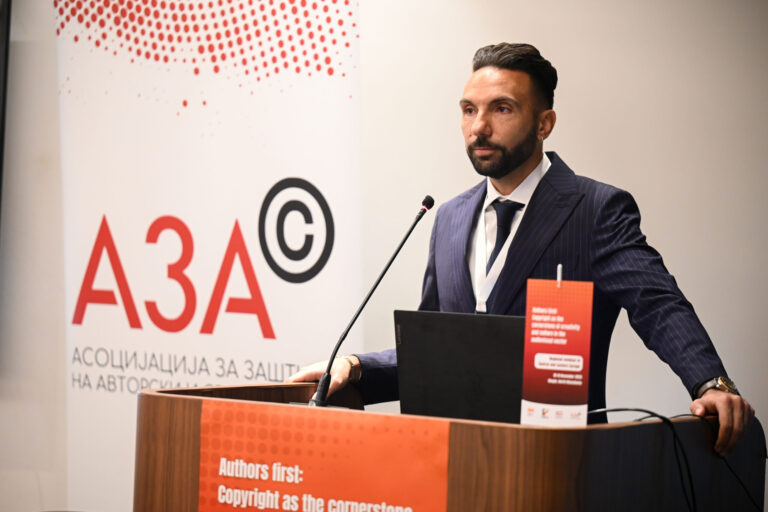
Skopje, 17 December 2025 – The Association for the Protection of Audiovisual Copyright and Related Rights (AZAS) has spent the past seven years advocating for the rights of film and audiovisual creators in North Macedonia – a struggle rooted in ensuring screenwriters, directors, performers and producers receive fair remuneration for the use of their works.
North Macedonia’s film heritage is internationally recognised, with acclaimed films such as Before the Rain and Honeyland gaining major global awards and nominations. Yet despite such cultural achievements, the creators behind these works have not received royalties from the exploitation of their films across TV and digital platforms a situation that AZAS has been working tirelessly to change.
AZAS: Licensed But Not Operational
AZAS was established as a non-profit collective management organisation (CMO) to administer copyrights for films and audiovisual works and was granted a licence by the Ministry of Culture in late 2018. However, the organisation remains unable to become fully operational because the mandatory tariff for collecting and distributing remuneration has not yet been approved by the Government – rendering AZAS unable to collect payments from users as intended under law.
This prolonged absence of an approved tariff has had significant financial consequences for authors and rightsholders. Based on the proposed tariffs and official data, it is estimated that between 2019 and 2024 more than €26 million in royalties remain unpaid, a figure that would still represent a substantial loss even if significantly reduced.
Longstanding Institutional Challenges
AZAS Secretary General Kiril Gjozev has repeatedly highlighted that the core issue is not a lack of legal basis but a lack of political understanding and sustained institutional action. Over the past year, Mr. Gjozev was invited twice to present the tariff question to the Government’s decision-making collegium, explaining the legal obligations and socioeconomic impact of approving the tariff.
In response, authorities initially requested further consultations among ministries, but more than a year later AZAS was informed that, due to the absence of follow-up information, the topic has been removed from the collegium’s agenda, representing a regression in the process and underlining the continued lack of political will to resolve this multi-year issue.
Relentless Advocacy, Regional Support and Collective Action
Although AZAS is not yet operational, the organisation has remained active and visible in various national and international forums:
- ·AZAS has continuously sought advice and cooperation with regional colleagues and partners.
- It has established bilateral agreements with several CMOs across Europe.
- The organisation has also provided policymakers with research and publications on copyright and collective management.
- Representatives of AZAS have attended film festivals and industry events to raise awareness of authors’ rights and the current impasse.
Skopje Regional Seminar: A Milestone of Solidarity
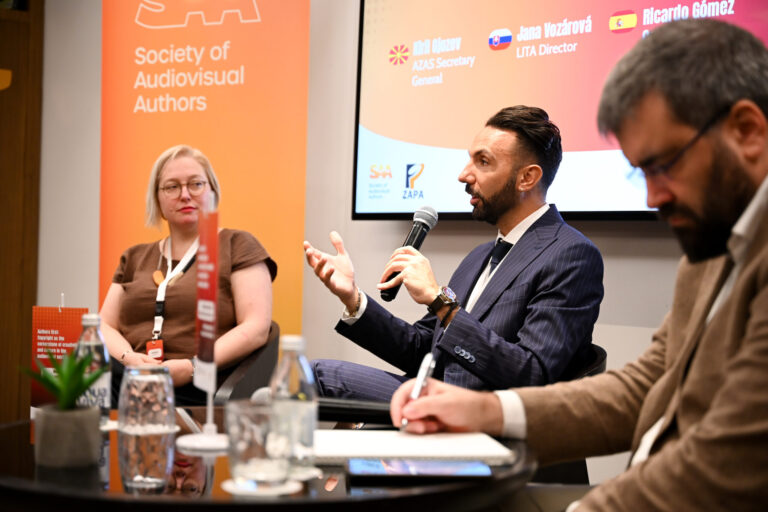
A key moment in 2025 was AZAS’s co-organisation of the regional seminar “Authors First: Copyright as the Cornerstone of Creativity and Culture in the Audiovisual Sector”, held on 18–19 November in Skopje with partners including the Society of Audiovisual Authors (SAA), AIPA (Slovenia) and ZAPA (Poland). The event brought together CMOs, authors, cultural organisations and industry stakeholders from Central and Eastern Europe to discuss copyright infrastructure, fair remuneration and collaborative solutions.
The seminar concluded with the adoption of the Skopje Call, a regional declaration urging Western Balkan governments to implement fair copyright frameworks and approve the tariff for AZAS without further delay. In the weeks following the seminar, letters were sent to the Prime Minister and the President of the North Macedonian Parliament, as well as to embassies and the European Union delegation.
Why This Matters
The continued blockade of AZAS’s tariff approval does not only affect Macedonian artists – it also impacts foreign audiovisual authors, performers and producers whose works are widely used in the country without reciprocal remuneration. This situation undermines not only the rights of local creators but also international reciprocity and trust in cross-border collective management systems.
AZAS has maintained a diplomatic and constructive approach, repeatedly engaging with national authorities and international partners to find a solution. At the same time, the organisation has considered legal options, though limited resources and the risk of jeopardising its licence have been constraints.
As Mr. Gjozev has remarked, asking for fair remuneration is not merely a legal exercise – it supports the local creative economy, cultural sustainability and regional cooperation. It is an investment in the future of North Macedonia’s cultural industries.
Towards Operationalisation and EU Integration
North Macedonia’s EU accession process makes this matter especially timely. Fulfilling existing legal obligations related to copyright and collective management would not only secure rights for creators but would also align the country with European standards and expectations – strengthening cultural, economic and institutional foundations.
AZAS looks forward to a positive resolution, an invitation to conclude the tariff approval process, and the opportunity to become fully operational – including progressing from observer to full membership within the SAA community.