From Recognition to Remuneration: AZAS Brings North Macedonia’s Voice to Sarajevo
AZAS brought North Macedonia’s voice to the Sarajevo Film Festival through its participation in the CineLink Industry Days panel on authors’ rights, copyright law and collective management. The discussion confirmed that international recognition of audiovisual works must be matched by effective protection and fair remuneration for their creators. Building on regional experience and strong European partnerships, AZAS remains committed to turning rights recognised on paper into a transparent and functional system that delivers in practice.
The Sarajevo Film Festival once again demonstrated the strength, ambition and international relevance of cinema from Southeast Europe. Alongside premieres, screenings and new creative partnerships, this year’s programme also opened an essential conversation: what happens to a film – and to the people who created it – after the applause ends?
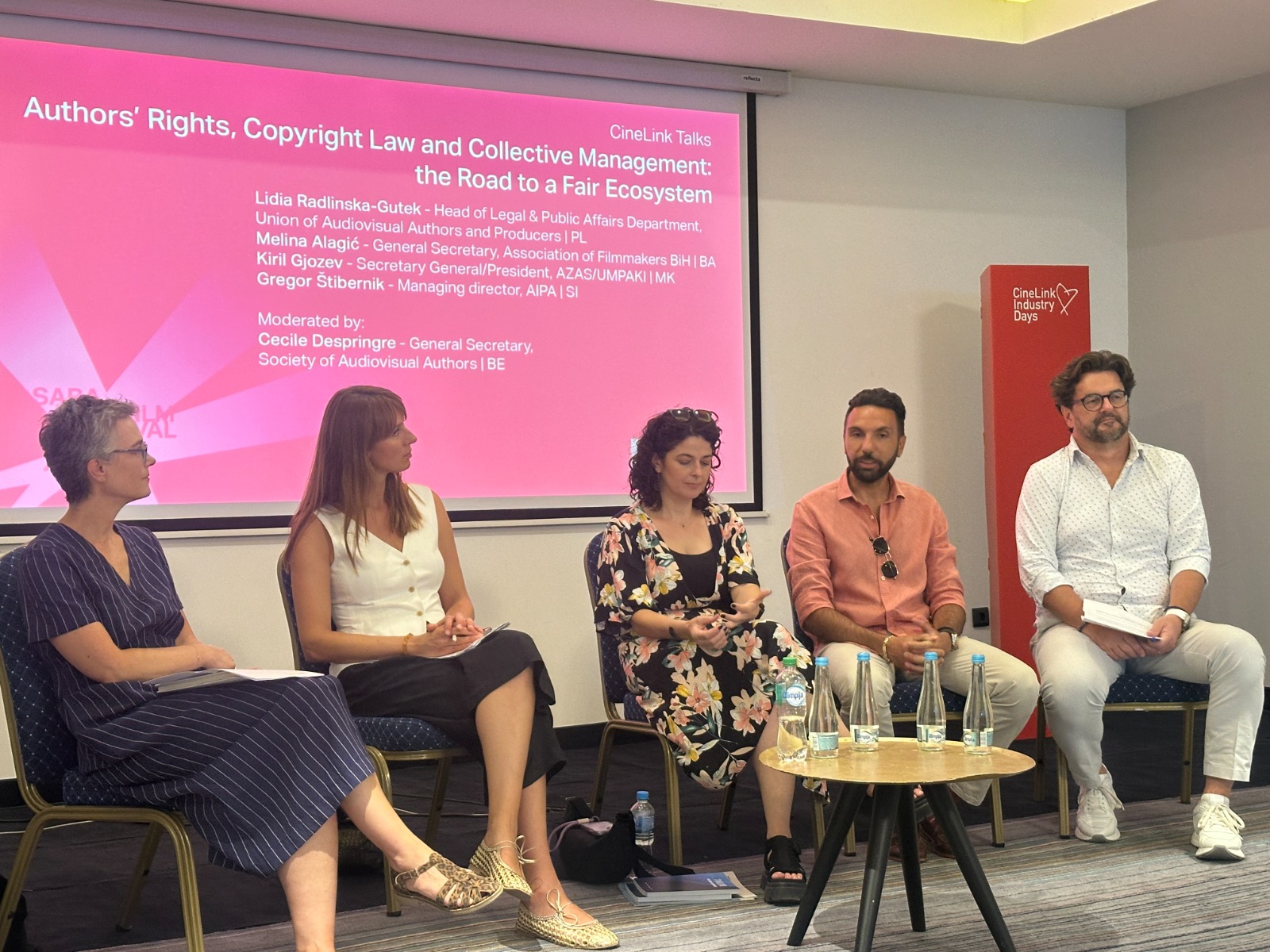
AZAS brought the North Macedonian perspective directly into that discussion through the participation of its Secretary General, Kiril Gjozev, in the CineLink Industry Days panel “Authors’ Rights, Copyright Law and Collective Management: The Road to a Fair Ecosystem.”
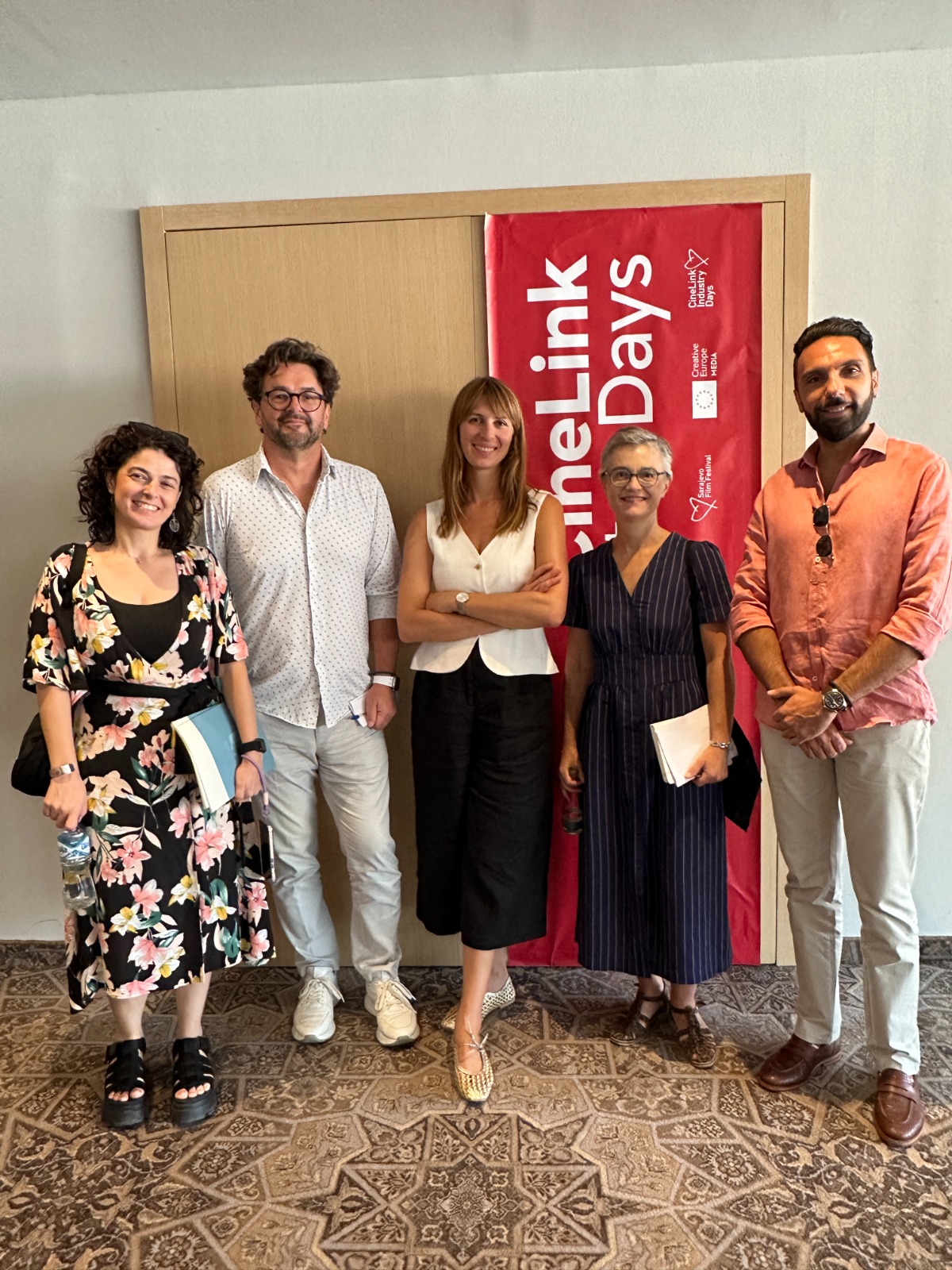
Organised in partnership with the Society of Audiovisual Authors – SAA, the panel brought together representatives of collective management organisations and film professionals from Poland, Slovenia, Bosnia and Herzegovina and North Macedonia. It was moderated by Cécile Despringre, Secretary General of the SAA.
Together with Gjozev, the discussion featured Lidia Radlińska-Gutek from SFP-ZAPA, Gregor Štibernik, Managing Director of AIPA, and Melina Alagić from the Association of Filmmakers of Bosnia and Herzegovina.
Different realities, one shared principle
The experiences presented in Sarajevo showed how differently audiovisual authors are treated across Europe.
In countries with established collective management systems, the use of films and audiovisual works generates meaningful remuneration for directors, screenwriters and other rightsholders. Poland’s SFP-ZAPA represents thousands of filmmakers and distributes substantial annual royalties, while Slovenia’s AIPA has demonstrated that a well-organised system can deliver concrete results even within a relatively small audiovisual market.
At the same time, authors in parts of the Western Balkans continue to face delayed implementation, institutional obstacles or the complete absence of remuneration.
North Macedonia represents one of the clearest examples of this contradiction. Macedonian films and filmmakers receive international recognition, participate in important festivals and contribute to European co-productions. Yet the domestic system still does not ensure that audiovisual authors, performers and producers receive the remuneration arising from the use of their works.
AZAS used the Sarajevo platform to make that reality visible – but also to demonstrate that the country already possesses the organisation, expertise, international partnerships and professional determination required to change it.
“Sarajevo confirmed that North Macedonia is not alone in facing these challenges, but it also showed that solutions already exist. We are returning home even more determined to turn rights recognised on paper into remuneration delivered in practice. AZAS is ready to work – with institutions, rightsholders, users and our international partners – to build a system that is fair, credible and functional,” stated Kiril Gjozev, Secretary General of AZAS.
Copyright is part of the cultural infrastructure
One of the clearest conclusions from the discussion was that copyright cannot be treated merely as a legal technicality. It is part of the cultural and economic infrastructure that allows creative work to continue.
Films do not end their economic life after a cinema screening or festival premiere. They continue to be broadcast, retransmitted, streamed, made available and communicated to audiences. Each use generates cultural and commercial value. A fair ecosystem ensures that part of that value returns to the people whose talent and work made the film possible.
Effective collective management provides the practical bridge between the existence of a right and its actual exercise. It allows thousands of individual uses to be monitored, licensed and converted into remuneration that an author could rarely secure alone.
The music sector has demonstrated the value of this model for decades. Audiovisual creators deserve an equally effective level of recognition and protection.
North Macedonia has stories – and the people behind them must be protected
The strength of the North Macedonian presence in Sarajevo made this message especially relevant.
Films with Macedonian participation appeared across the Festival’s competitive and parallel programmes, while Macedonian professionals contributed to its industry and institutional discussions. This visibility confirmed once again that the country possesses creators whose work can travel, compete and connect with international audiences.
The participation of Film Agency Director Saško Potter Micevski in the subsequent discussion on artificial intelligence further strengthened the country’s presence in the professional programme. His contribution placed North Macedonia within another defining European conversation: how technological development can be embraced without diminishing human creativity, authorship and responsibility.
Together, the two discussions addressed complementary parts of the same future – how audiovisual works will be created and how the people behind them will be recognised, protected and remunerated.
For AZAS, successful Macedonian films and a functioning system of rights protection are not competing priorities. They are parts of the same sustainable audiovisual ecosystem.
International recognition should therefore be matched by domestic responsibility. Every Macedonian film shown, broadcast or retransmitted is evidence not only of creative achievement, but also of rights that must be respected in practice.
Sarajevo as a starting point, not a conclusion
AZAS’s participation in Sarajevo forms part of a broader and continuous effort to move North Macedonia closer to established European standards.
During recent years, the organisation has built partnerships with experienced collective management organisations, participated in international professional networks, exchanged legal and operational knowledge and consistently advocated for a functional national system. Its approach remains proactive: to prepare solutions, develop institutional capacity and bring relevant stakeholders together rather than merely wait for circumstances to change.
The Sarajevo discussion reinforced the importance of regional cooperation. Countries may face different legal and institutional conditions, but many of their challenges are shared. By combining experience, data, technical knowledge and public advocacy, the audiovisual community can advance more effectively than any organisation working in isolation.
AZAS will therefore continue the dialogue initiated in Sarajevo – with its regional partners, European networks, Macedonian institutions, rightsholders and users of audiovisual works.
The objective is not conflict, nor a system that benefits one side at the expense of another. It is a balanced and transparent framework in which creativity is encouraged, works can circulate legally and those who generate cultural and economic value receive their fair share.
Sarajevo showed that North Macedonia belongs in this European conversation. The task ahead is to ensure that the country also belongs among those where audiovisual rights function in everyday practice.
Macedonian stories are already travelling beyond our borders. AZAS will continue working so that recognition, respect and remuneration travel back to their creators.