
Slovenia Continues to Invest in Its Audiovisual Community. Why Are We Still Waiting?
More than 3 million euros in dedicated support, hundreds of beneficiaries and sustained investment in professional development: Slovenia’s AIPA demonstrates what functioning collective management can contribute to an audiovisual community. What is preventing North Macedonia from building its own opportunities?
by Kiril Gjozev, Secretary General of AZAS
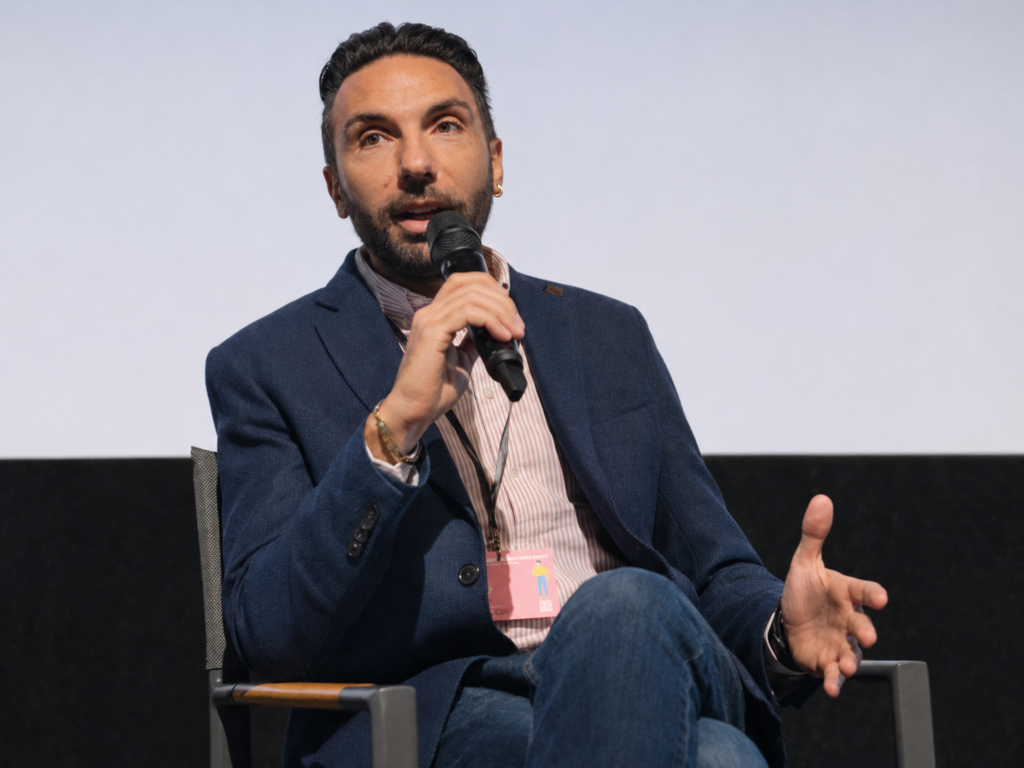
Kiril Gjozev, Secretary General of AZAS
Thirty scholarships, twenty-eight educational projects delivered by eight professional associations, and more than 420 individuals receiving support in a single year.
These are among the results reported by Slovenia’s AIPA for 2025 through its dedicated funds for audiovisual co-authors, performers and film producers.
For Macedonian audiovisual professionals, these figures deserve attention. They describe practical opportunities in a nearby country: access to education, assistance during difficult periods and support for professional development and international participation.
They also raise a question that deserves a clear answer: what is preventing our own sector from building a functioning system capable of delivering such benefits?
What the Slovenian figures show
According to AIPA’s announcement, its three dedicated funds distributed 526,051 euros in 2025:
- 329,824 euros through the fund for audiovisual co-authors;
- 88,307 euros through the performers’ fund;
- 107,920 euros through the film producers’ fund.
The longer perspective is equally significant. Disbursements amounted to 605,928 euros in 2022, 709,840 euros in 2023 and 637,244 euros in 2024. Together with the 2025 payments and €608,330 euros distributed by August 2026, the total reached 3,088,393 euros .
These dedicated funds operate alongside AIPA’s collection and distribution of remuneration. Their allocation follows established rules and decisions by the relevant categories of rights holders. The resources available to each fund differ because the revenues collected for those groups differ.
The foundation is therefore a functioning collection system, supported by accountable decisions about how available resources can serve the community.
Investment that reaches people
In 2025, 70.94% of dedicated-fund disbursements supported education, while 15.52% supported cultural and artistic purposes and 13.54% supported social purposes.
Behind these percentages are activities with direct professional value. Authors received scholarships and development opportunities. Performers obtained partial reimbursement for workshops in acting, dubbing and casting. Professional associations organised training, incubators, conferences and exchanges.
In AIPA’s announcement, Mojca Fatur, President of the Slovenian Audiovisual Actors Association, describes how this support enabled the association to bring distinguished international lecturers to Slovenia. Members could access specialist training at home, avoiding the substantial costs of travel and accommodation abroad.
Urša Menart, President of the Slovenian Directors’ Association, explains that dedicated funding makes professional lectures and workshops free for participants. She reports that more than 50 screenwriters have trained through its Screenplay House under the mentorship of Srđan Koljević and Elma Tataragić, with projects developed there progressing to significant national and international recognition.
Other measures respond to pressures that can interrupt a professional career, including rising food and energy costs, medical expenses and exceptional social hardship. In 2026, AIPA also introduced support for producers whose works are presented in official programmes at foreign festivals or distributed internationally.
Gregor Štibernik, Director of AIPA, describes the purpose in the announcement:
“The dedicated funds are an important way in which we return funds directly to the AV community and support its development, new knowledge and professionalization.”
This approach connects individual support with the development of the wider environment in which audiovisual works are created.
What could become possible in North Macedonia?
Slovenia provides a practical reference for what sustained institutional development can achieve.
For AZAS, the immediate responsibility is to make the core system function: identify relevant uses, collect remuneration and distribute it accurately and transparently. Effective operation could, over time, also establish a foundation for additional support measures, where legislation, available resources and rights holders’ decisions permit.
We should be realistic about the comparison. Slovenia’s revenues cannot be assumed for North Macedonia, and dedicated funds would require their own legal and financial basis. AIPA’s results reflect years of work.
That is precisely why further delay matters. We continue to postpone the process through which our own capacity could develop.
An author working on a new screenplay, a performer seeking specialist training or a producer presenting a film abroad should be able to envisage a stronger professional future at home. A functioning collective management system could contribute to that future through remuneration and, eventually, other properly established forms of support.
Our sector deserves the opportunity to build it.
What, exactly, remains unresolved?
AZAS received its licence in 2018. Yet the prolonged tariff process continues to prevent the collective management system we have worked to establish from becoming fully operational.
For the professionals concerned, the consequences extend well beyond an administrative procedure. Each year of uncertainty delays the functioning of a remuneration mechanism and the development of an institution intended to serve their work.
How much longer should they wait, and who will give them a concrete answer?
AZAS remains ready to cooperate. But are there, in fact, outstanding issues preventing progress? If so, what exactly are they?
We ask for a clear, documented answer, a timetable for resolving any identified obstacles and a transparent process through which everyone can follow progress. If no such obstacles remain, the sector deserves to know why the necessary decisions are still pending.
A reasoned answer creates room for action. Continued uncertainty makes it harder for professionals to plan and for institutions to maintain confidence.
An opportunity to leave something lasting
The Government, the Ministry, broadcasters and rights holders each have responsibilities in establishing a workable system.
AZAS must fulfil its role through accountable governance, transparent administration and reliable service. Broadcasters and other users need predictable obligations and professional procedures. The responsible public institutions need to explain and take the decisions within their competence.
There is a shared interest in resolving this.
Our authors, performers and producers contribute to the country’s cultural identity and international reputation. Their achievements bring recognition to North Macedonia. The conditions that allow them to continue working deserve consistent institutional attention.
For those holding public office, resolving this issue would be an opportunity to leave a meaningful contribution. Professionals remember decisions that opened opportunities, established fair procedures and allowed them to work with greater confidence.
The experience shared by AIPA offers encouragement and a valuable basis for professional exchange. North Macedonia can learn from that experience while developing arrangements suited to its own circumstances. Cooperation with European partners can help, but progress also requires decisions at home.
We would much rather report on benefits finally reaching Macedonian audiovisual professionals than publish another account of unanswered appeals.
The opportunity remains. A clear institutional response and a credible timetable would give the sector a reason to look ahead with confidence.